Design-build construction is a project delivery method where one company designs and builds your project under a single contract. If you have been searching for what is design build construction, you are in the right place. In the older design-bid-build approach, you hire an architect first, then bid the finished drawings out to separate contractors; design-build merges those two roles into one accountable team.
If you are planning a renovation, an addition, or a custom home, the real question you are asking is simple: Is this the right method for my project? That is what this guide is built to answer.
In the next few minutes, you will learn exactly how the design-build construction process works step by step, how it compares head-to-head with design-bid-build on cost, speed, and risk, the specific benefits and trade-offs to expect, and what to look for when choosing a design and build construction company you can trust with your home.
What Is Design-Build Construction?
Design-build is a single-entity, single-contract delivery method. One firm, the design-builder, holds legal responsibility for both the design and the construction of your project.
You sign one agreement, work with one team, and look to one party if anything goes wrong. There is no separate architect contract on one side and a general contractor contract on the other.
How that single entity is structured varies, but it almost always falls into one of three setups:
- Integrated firm. Architects, designers, estimators, and field supervisors all work for the same company, under one roof. This is common in residential design-build construction companies.
- Contractor-led with in-house design. A general contractor employs or retains licensed architects and engineers directly, so design and construction report to the same leadership.
- Joint venture (JV) or design-build team. An architecture firm and a construction firm form a single legal entity for the project. The owner still signs one contract; the JV manages the internal split.
In every version, the goal is the same: align the people drawing the project with the people building it, so cost, schedule, and constructability are decided together instead of fought over later.
According to the Design-Build Institute of America (DBIA), design-build is projected to account for nearly 47% of all U.S. construction spending in the non-residential sector, outpacing every other delivery method and growing faster than traditional design-bid-build for more than a decade running.
A quick note on jargon. A “delivery method” is just how a project gets from idea to finished building. “Change orders” are paid changes added after the contract is signed. “Scope” means the list of work the contract covers. These terms are used throughout this guide.
The Design Build Construction Process
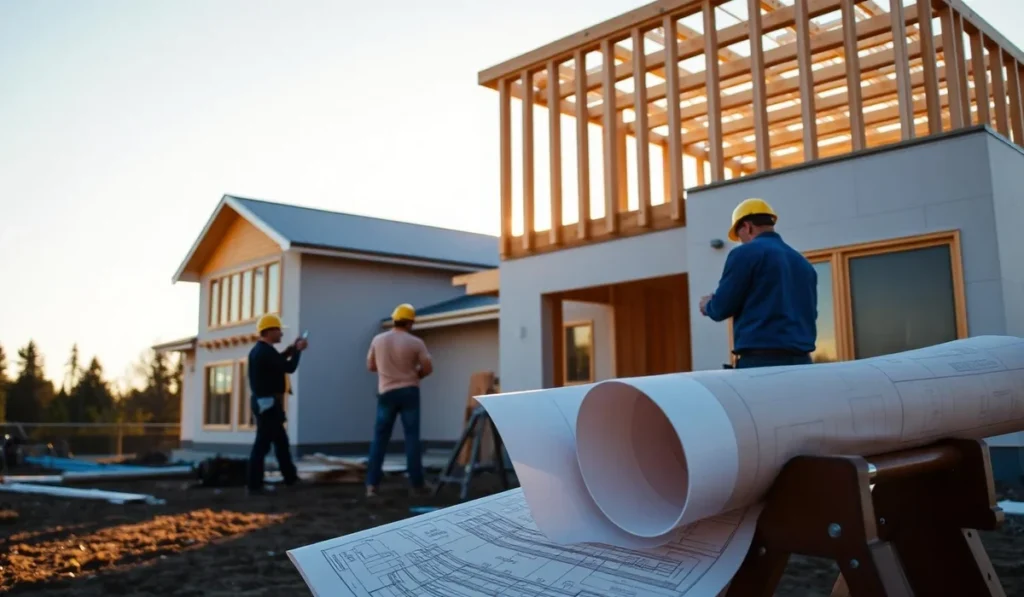
The design-build construction process moves through six clear stages. Each stage builds on the last. The owner approves the work before the team moves forward.
- Discovery. The team meets at the property, listens to the owner’s goals, measures the site, and reviews any existing drawings.
- Design. An in-house architect and engineer draw the project. The owner sees options in plan view and 3D as the team prices each one.
- Pricing. You get a firm number, not a vague estimate, based on real material costs and labor hours.
- Permits. The design-builder submits drawings to the local building department and handles every revision on the owner’s behalf.
- Build. A single project manager runs the site. Trades work under one schedule. The owner gets weekly updates.
- Closeout. The team walks the project with the owner, finishes the punch list, and hands over warranty and maintenance docs.
This is the design-build project delivery method in plain language. It keeps design choices and money choices in the same conversation.
Design Bid vs Design Build
Design bid vs design build is the most common question homeowners ask. Both methods can finish a project. They handle risk, time, and money in very different ways.
| Factor | Design Bid Build | Design Build |
| Contracts | Two separate contracts | One contract |
| Timeline | Sequential, longer | Overlapping, faster |
| Risk | Owner holds the risk | Contractor holds the risk |
| Change Orders | Common and costly | Rare and smaller |
| Accountability | Split between parties | Single point of contact |
In design-bid-build, the owner sits between the architect and the builder. If the drawings have a gap, the builder asks for a change order. You pay. In design-build, that gap is the contractor’s problem, not yours.
Design Build vs Traditional Construction
Design-build vs. traditional construction comes down to one word: ownership. Traditional construction splits ownership of the result. The architect owns the design. The builder owns the build. You own the gaps between them.
Design-build collapses that split. The same firm owns the design and the build. When a problem shows up on site, the team solves it. They do not stop work to argue about whose fault it is.
For most homeowners, understanding design-build vs. general contractor also helps when choosing the right project delivery method. You hired a company to deliver a finished space. You did not hire one to manage a fight between two other companies.
| Aspect | Traditional Construction | Design-Build |
| Contracts | Two separate contracts to manage | One contract for design and build |
| Project Structure | Owner sits between architect and builder | Single point of contact end to end |
| Cost Control | Frequent change orders, paid by owner | Pricing locked during design phase |
| Timeline | Sequential timeline, longer overall | Overlapping timeline, faster delivery |
| Responsibility | Split warranty and accountability | Unified warranty under one firm |
Benefits of Design Build
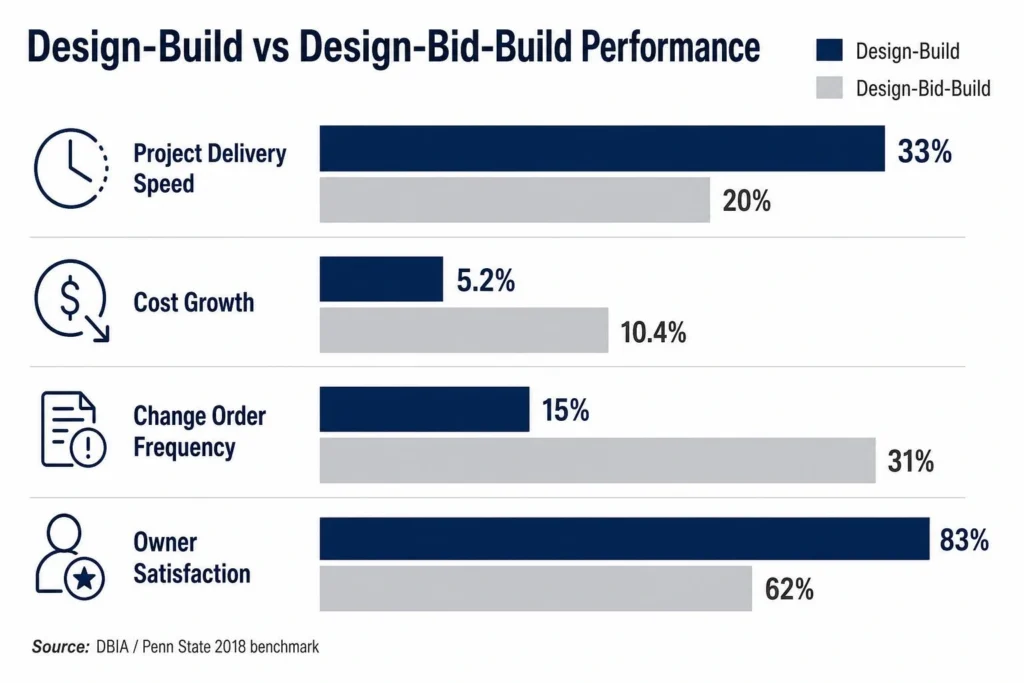
The benefits of design-build are not opinion. The 2018 Design-Build Institute of America (DBIA) and Pennsylvania State University benchmark study compared more than 200 projects across the United States and found design-build delivered projects 33.5% faster than design-bid-build, with 6% lower unit costs and 5.4% less cost growth from contract to completion.
Those numbers translate into six concrete advantages every owner should understand before choosing a delivery method.
Advantages of Design Build Construction
- Speed. Design and permitting can overlap. Most projects finish 20% to 30% faster than design-bid-build.
- Cost certainty. Pricing happens during design. You know the real number before construction starts.
- Accountability. One firm owns the outcome. No finger-pointing when something needs to change.
- Fewer surprises. The builder catches design conflicts on paper, not in the wall after demo.
- Better trade coordination. Plumbing, electrical, and HVAC plans together from the start.
These advantages of design-build construction are the reason most commercial and federal projects now use this method. The same logic applies to homes.
Advantages of a Design-Build Contract
- One signature. You sign with one party for the full scope.
- Clear scope. The contract names the deliverable, not just the drawings.
- Fewer disputes. You cannot have a fight between two parties when there is only one.
- Transparent pricing. Good contracts show line-item costs and allowances.
- Warranty clarity. One firm warrants the design and the workmanship together.
These advantages of a design-build contract protect the owner. The design-build advantages are not just about speed. They are about clear legal responsibility.
What Design Build Contractors Actually Do
Design-build contractors wear many hats. A good firm offering design build construction services has the following roles under one roof or under one tight network of partners.
- Architect. Draws the plans, handles code, and shapes the look of the space.
- Structural engineer. Size beams, columns, and foundations so the building stands up.
- MEP engineer. Plans the mechanical, electrical, and plumbing systems.
- Estimator. Price every item in the design as the drawings progress.
- Project manager. Runs the schedule, the trades, and the client updates.
- Superintendent. Lives on the job site and supervises daily work.
- Trades. Carpenters, plumbers, electricians, and finishers do the hands-on work.
When you hire design-build contractors, you hire that whole team. You do not have to chase any of them down. The project manager keeps them aligned on your behalf.
Industrial Design Build vs Residential Projects
Industrial design build covers warehouses, factories, distribution centers, and large commercial buildings. The method is the same. The scale and the code requirements are bigger.
For property owners, the choice between industrial construction design-build and a residential approach depends on the building. A multi-tenant property, a mixed-use site, or a small commercial building often calls for the industrial track. A single-family home, an addition, or a remodel fits the residential track.
Both tracks share the same core. One contract. One team. One person you call when you have a question.
How to Choose a Design and Build Construction Company

Not every design and build construction company runs the method well. Some firms call themselves design-build but still farm out the design. Use this checklist before you sign anything. Before choosing a firm, read our guide on how to evaluate design-build contractors.
- Licensing. Check the state contractor license and the architect’s stamp. Both should be current.
- In-house design. Ask who draws the plans. The answer should be a person on staff, not a sub.
- Portfolio. Ask to see three finished projects close to your scope and budget.
- References. Call two past clients. Ask about change orders, communication, and the punch list.
- Contract clarity. Read the contract. It should name a fixed price or a clear cost-plus structure with a cap.
- Insurance. Ask for a current certificate showing general liability and workers’ comp.
- Warranty. Look for a written warranty of at least one year on workmanship.
- Communication style. You will work with this team for months. Pick people you can talk to.
Frequently Asked Questions
What is design-build construction in simple terms?
Design-build construction is one contract that covers both design and building. One team handles the drawings, the budget, and the build. You have a single point of contact from start to finish.
Is design-build cheaper than traditional construction?
It often costs less because the team prices the design as they draw it. You catch budget problems early. Fewer change orders and faster timelines also lower the total cost on most projects.
How long does a design-build project take?
Most home projects run 20% to 30% faster than the design-bid-build method. Design and permits can overlap. You break ground sooner and finish sooner.
Who is responsible if something goes wrong?
The design-build contractor owns the result. They cannot blame the architect, and the architect cannot blame the builder. One contract means one company is accountable.
Can the homeowner still pick finishes and design choices?
Yes. Owners make every design choice alongside the team. The design-builder presents options, prices, and trade-offs in real time, so the homeowner stays in control while the team handles the technical work.
Final Thoughts
Design-build construction puts you on the same side of the table as your designers and builders. You sign one contract. You get one schedule. You hold one company accountable for the finished result.
For most homeowners and property owners, that structure removes the worst parts of a construction project. Fewer change orders. Fewer arguments. Fewer surprises. A clear price, a clear timeline, and a clear point of contact.
If you are planning a project, ask any firm you talk to how they handle design, pricing, and the build. Their answer tells you whether they actually run the design-build project delivery method or just market it.