The benefits of design-build construction now drive most major commercial decisions in the United States. Owners want one team, one price, and one schedule, so they hire design and build contractors instead of stitching together a separate architect and general contractor.
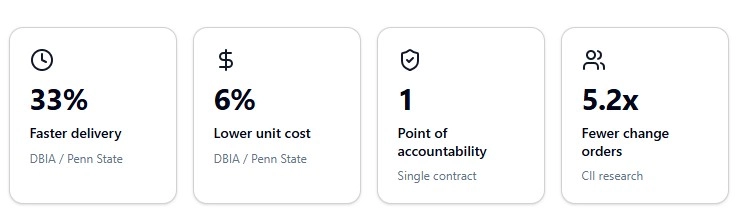
The Design-Build Institute of America (DBIA) and Pennsylvania State University report that design-build projects finish about 33% faster and cost roughly 6% less than traditional design-bid-build projects.
In this guide, we explain what a design-build general contractor does, the advantages of design-build construction over the traditional model, and how design-build vs traditional construction actually plays out on schedule, budget, and risk. We also share how to pick a qualified design build construction company for your next project.
What Is a Design-Build Contractor?
A design-build contractor is one firm that owns both the design and construction of a project under a single contract. The owner signs one agreement. The design-build team handles architecture, engineering, permits, and construction from start to finish.
In the traditional model, the owner hires a designer first and a general contractor second. Those two parties work under separate contracts. Any gap between drawings and field conditions becomes the owner’s problem to solve and pay for.
A design-build construction company removes that split. The same team draws the plans and builds the work. This is the core idea behind the benefits of design-build construction.
Primary Benefits of Design-Build Construction
A design-build contractor makes construction easier to manage. One team handles design and construction, which improves communication, saves time, controls costs, reduces changes, and keeps the project moving smoothly from start to finish.
1. Single-Source Accountability
One contract means one point of responsibility. If a detail is missed in design, the same firm fixes it in the field at no extra cost to the owner. That clear ownership is the most cited advantage of design-build construction.
2. Accelerated Project Delivery
Design and construction run in parallel instead of in sequence. Site work and long-lead orders can start while final drawings are still in progress. This is how design-build construction saves time and money on the schedule.
3. Cost Certainty and Budget Control
The builder prices the work as the design grows. The team flags expensive details early and offers cheaper options through value engineering. This steady cost management check leads to far fewer budget surprises late in the job.
4. Improved Communication and Collaboration
Designers and builders sit at the same table from day one. Decisions move fast because the people who draw the work also build it. Owners get shorter email chains and clearer status updates.
5. Reduced Change Orders and Owner Risk
Constructability reviews during design catch conflicts before they hit the field. A constructability review is a check that asks if the drawings can actually be built with the chosen materials and crew. Fewer field surprises mean fewer change orders.
6. Enhanced Design Innovation and Constructability
Builders know what materials ship fast and what labor is available. They bring that knowledge into the design. The result is a smarter set of drawings that match the real market.
7. Reduced Administrative Burden on the Owner
One contract means one invoice stream, one schedule, and one safety plan. Owners spend less time chasing paperwork between separate firms.
8. Higher Quality and Long-Term Performance
The team that designs the building also stands behind how it performs. That shared stake pushes the group toward durable materials and clean systems.
9. Owner Control and Empowerment
Design-build does not take the owner out of the driver seat. It puts the owner at one table with the full team. You see live pricing, real options, and clear trade-offs before any decision is locked.
10. Continuity from Concept Through Warranty
One team stays with the project from the first sketch to the final walk-through. The people who picked the roof system are still there when the roof needs a tune-up.
11. Competitive Subcontractor Bidding Still Happens
A common myth is that design-build skips bidding. It does not. The design-build firm still bids out the bulk of the trade work to qualified subcontractors.
How Design-Build Saves Time and Money
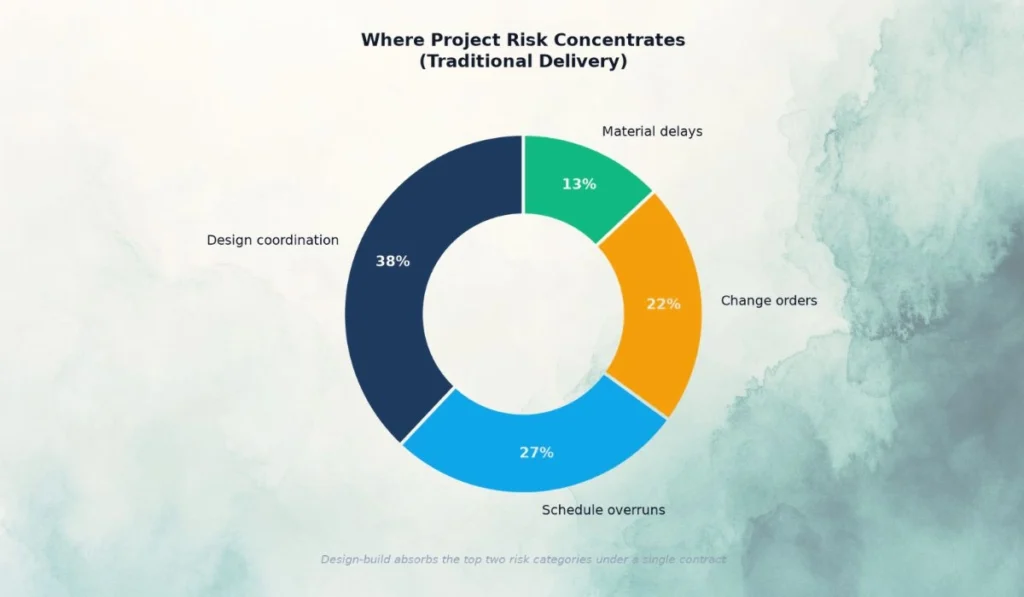
How design-build construction saves time and money comes down to four simple moves. The team runs work in parallel, prices as it draws, locks in costs early, and cuts paperwork.
- Parallel work. Permits, site prep, and long-lead orders start while drawings are still in progress.
- Value engineering during design. The builder swaps costly details for equal options before the drawings are final.
- Fewer RFIs and rework. Shared offices and shared incentives cut these to a fraction of traditional levels.
- Locked-in pricing. A guaranteed maximum price (GMP) caps the owner’s exposure once design hits a set milestone.
Research from the Design-Build Institute of America and the Construction Industry Institute backs these results across thousands of projects.
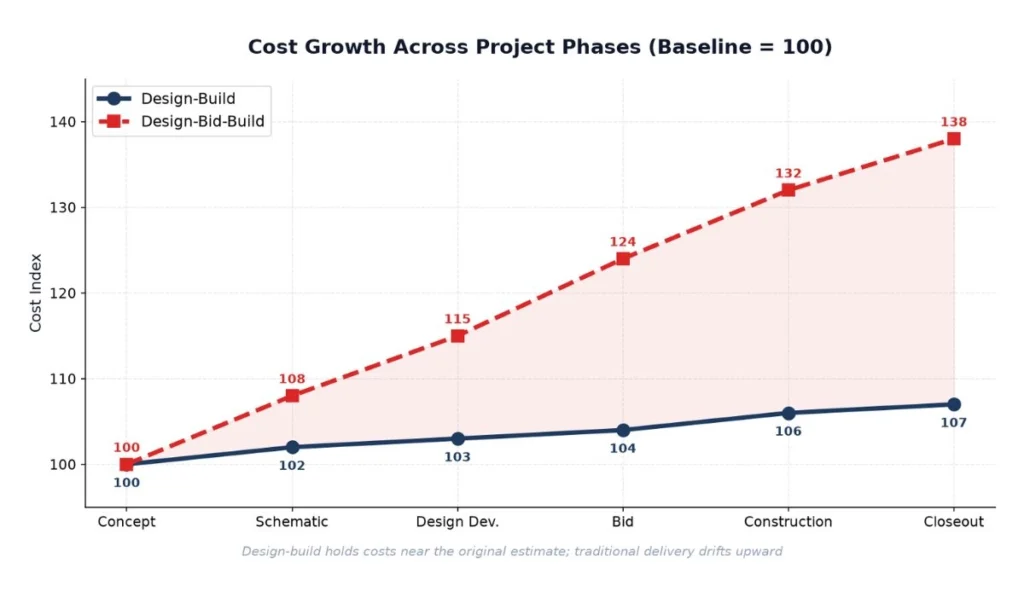
Design Build General Contractor vs Traditional General Contractor
A traditional general contractor builds from finished plans that someone else drew. A design-build general contractor owns both the drawings and the build under one contract, so the same firm answers for design decisions and field execution. That is the single biggest reason owners now ask for design-build contractors by name.
A modern design-build construction company keeps architects, engineers, estimators, and superintendents under one roof. You get one number to call, one schedule, and one warranty.

Design Build vs Traditional Construction
Design-build vs traditional construction is the most common question we hear from new clients. The short answer is that design-build collapses two contracts into one and folds design and build into one timeline.
| Factor | Design-Build | Design-Bid-Build (Traditional) |
|---|---|---|
| Contracts | One contract | Two or more contracts |
| Timeline | Design and build overlap | Design, then bid, then build |
| Cost feedback | Continuous during design | After design is complete |
| Risk owner | Design-build firm | Owner sits between parties |
| Change orders | Lower frequency | Higher frequency |
| Average delivery speed | ~33% faster (DBIA) | Baseline |
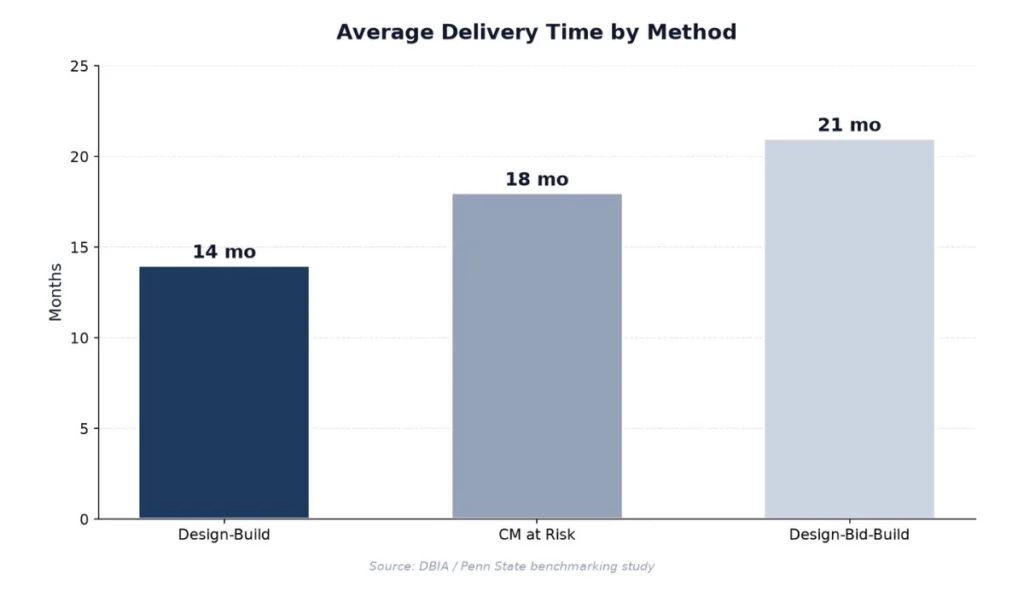
Comparison of Project Timelines
A traditional project waits for full drawings before bids go out. A design-build project starts site work and orders steel while interior details are still in design. That overlap is where most of the schedule gain comes from.
Comparison of Cost Structure and Risk Allocation
In design-bid-build, the bid is the first real number, and it often comes in high. In design-build, the budget grows with the drawings. The risk of gaps between design and field work sits with the contractor, not the owner.
Comparison of Communication and Accountability
Design-build vs. general contractor decisions often come down to accountability. When choosing a general contractor, look for clear communication and defined responsibilities. With a general contractor, design issues typically go back to the architect, while a design-build contractor provides one point of contact.
Benefits Across Commercial and Residential Project Types
Commercial construction projects gain predictable opening dates, clear budgets for lenders and partners, and fewer disruptions during tenant fit-out. That helps with financing and with the cost of carrying a building through construction.
Residential projects gain a single warranty, one team to answer questions, and clear cost limits up front. Homeowners avoid the stress of refereeing between an architect and a builder who do not agree.
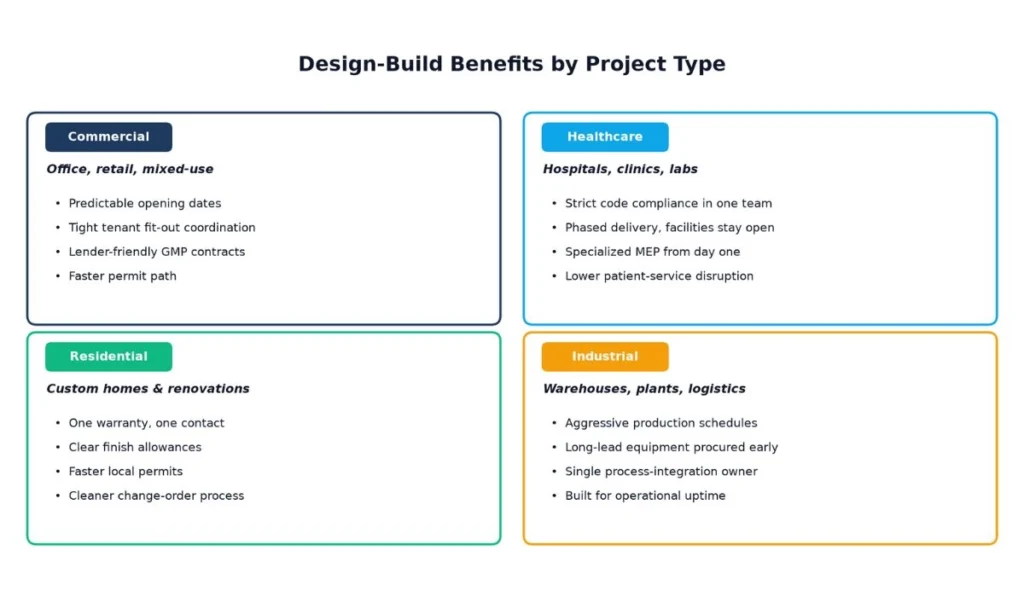
Office, retail, and mixed-use:
- Predictable opening dates for lease commitments
- Tight coordination with tenant fit-out
- Lender-friendly GMP contract structure
- Faster path through entitlements and permits
Hospitals, clinics, and labs
- Strict code compliance handled in one team
- Phased delivery while facilities stay open
- Specialized MEP integrated from day one
- Lower disruption to patient services
Custom homes and renovations
- One warranty and one point of contact
- Clear allowances for finishes
- Faster permits through familiar local relationships
- Cleaner change-order process
Warehouses, plants, and logistics
- Aggressive schedules tied to production goals
- Heavy long-lead equipment procured early
- Single accountability for process integration
- Built for operational uptime, not just code
Project Conditions Where Design-Build Delivers the Greatest Value
Design-build fits projects where speed, budget control, and one source of truth matter most. Healthcare, education, municipal, industrial building design, tenant improvements, and complex renovations are strong fits. So are custom homes and large remodels with many trades.
Traditional delivery can still make sense in a few cases. Projects with strict architectural mandates or statutory low-bid rules may need the split contract model. We tell owners the truth when their project is one of those cases.
When Design-Build May Not Be the Right Fit
Design-build is a strong default, but it is not the only answer. We tell owners to pause on design-build in these cases.
- Statutory low-bid rules. Some public projects must award the lowest qualified bid on a finished design.
- Signature architectural work. When a named architect must lead the vision, a split contract can protect that role.
- Very small or simple jobs. A short renovation may not need the full design-build structure to succeed.
- Owner teams with deep in-house design. Some owners already employ the design talent and prefer to keep it separate.
How to Select a Qualified Design-Build Contractor
The top design build contractors share a clear set of traits. If you are wondering how to choose design and build contractor, use this checklist when you compare firms.
- In-house design and engineering. Avoid firms that outsource the design work to a third party.
- DBIA certification. DBIA stands for the Design-Build Institute of America. Certified pros follow proven best practices.
- Active licensing and insurance. Confirm the licenses and limits that match your project size and state.
- Sector experience. Ask for three recent projects in your project type and budget range.
- Clear contract structure. Choose between a guaranteed maximum price (GMP) or a lump sum, and read the change-order clause.
- Client references. Call past owners and ask what the firm did when the schedule or budget slipped.
- Safety record. Ask for the experience modification rate (EMR). A score under 1.0 is a good sign.
Next Steps for Your Design-Build Project
The benefits of design-build contractors only show up when the team is the right fit for the work. Our team at Epic Construction Management handles design and build under one roof.
Frequently Asked Questions
What are the primary benefits of design-build contractors?
The main benefits of design-build contractors are single-source accountability, faster delivery, cost certainty, fewer change orders, and better team communication. One firm owns both design and construction, so the owner deals with one contract and one point of contact.
How does design-build construction reduce schedule and cost?
Design-build saves time and money by overlapping design, permitting, and early procurement. The builder joins the design table early, so the team prices work as it is drawn. This cuts rework, changes orders, and gaps between phases.
How does a design-build contractor differ from a general contractor?
A general contractor builds from finished plans drawn by a separate architect. A design-build contractor owns both the design and the build under one contract. That single accountability is the core difference in design build vs general contractor decisions.
Is design-build typically more cost-effective than traditional construction?
Yes. Research from the Design-Build Institute of America and Pennsylvania State University shows design-build projects cost about 6% less and finish around 33% faster than design-bid-build projects on average.
Is the design-build method appropriate for residential projects?
A: Yes. Homeowners get one contract, one warranty, and one team. That makes budgets, schedules, and finishes easier to manage on custom homes, additions, and full renovations.
How should an owner identify a qualified design-build contractor?
Look for in-house design and engineering staff, DBIA certification, proper licensing, recent work in your sector, clear contract terms such as a guaranteed maximum price, strong client references, and a solid safety record.
What are the principal advantages of design-build over design-bid-build?
Design-build offers one point of accountability, parallel design and construction, early cost feedback, fewer change orders, and a shorter overall schedule. Design-bid-build splits these roles and shifts coordination risk to the owner.