
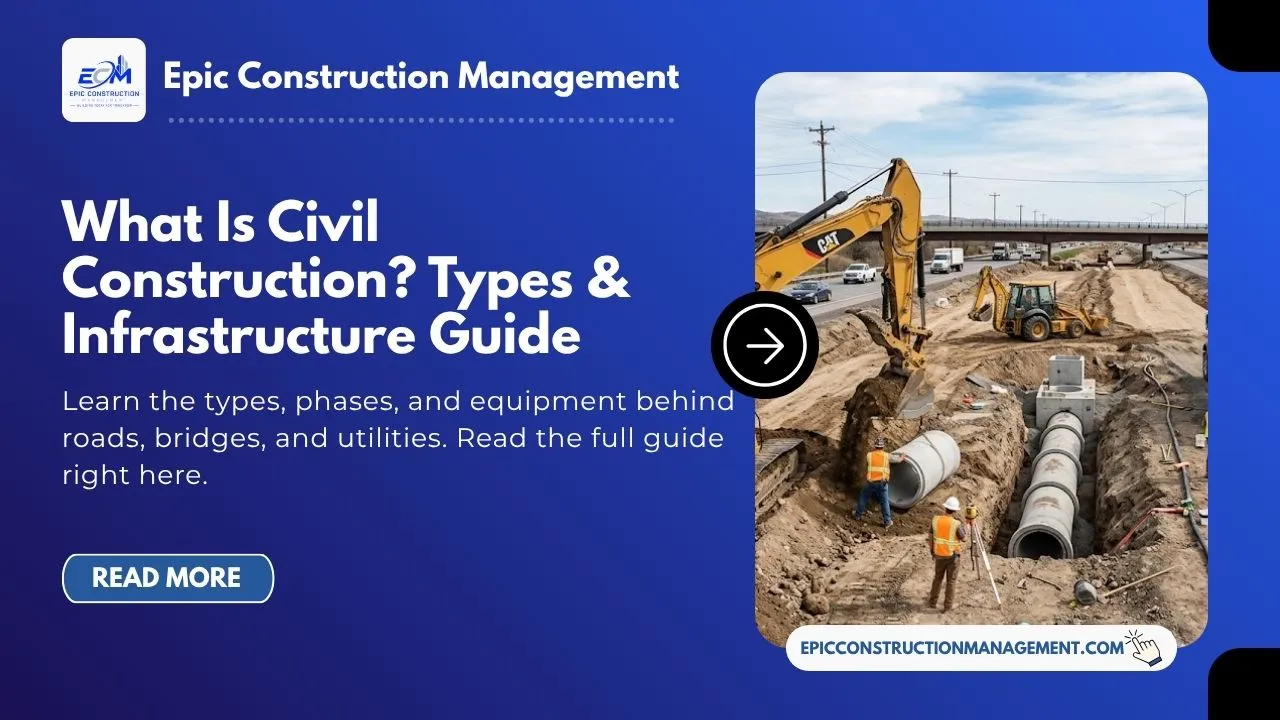
What is civil construction? Think of the roads you drive on, bridges you cross, and drainage systems that move stormwater. All these can fall under civil construction work. From preparing a site to building major civil infrastructure, this work creates the systems people rely on every day.
What Is Civil Construction?
Civil construction shapes the land and builds the systems for functional modern society. It is often referred to as the “backbone” of urban development. It creates the foundation for buildings.
Civil construction is the process of creating facilities for transportation, utilities, water management, and community development. Roadwork and site preparation, bridges, drainage systems, sewer lines- everything is an example of civil construction.
General construction focuses on a single lot. A civil construction team focuses on the roads leading to that lot. The pipes bringing water to it. And the systems that manage the surrounding environment.
What Civil Construction Work Involves
This work involves a massive amount of earthmoving, structural engineering, and utility management. It starts with analyzing the soil and terrain to ensure the ground can support heavy loads. Once the site is ready, teams use heavy machinery to install the systems. Such as highways or water treatment plants. This keeps the city running.
How Civil Construction Differs from General Construction
The main difference is what gets built. General construction focuses on buildings for people to live or work in. Civil construction focuses on infrastructure such as roads, bridges, drainage, utilities, and other large-scale public or private projects. Civil work creates the facilities for buildings, communities, and transportation systems to function.
What Makes a Project Part of Civil Construction
A project will be a part of civil construction if its primary goal is to serve the public or provide a utility. If the work involves moving large amounts of soil, managing water flow, or creating transportation networks, it falls into the civil category. These projects are almost always managed or regulated by government entities to ensure public safety.
What Is Civil Construction Work?
Civil construction work is the physical labor and technical methods to build infrastructure. Use of massive equipment and specialized engineering plans.
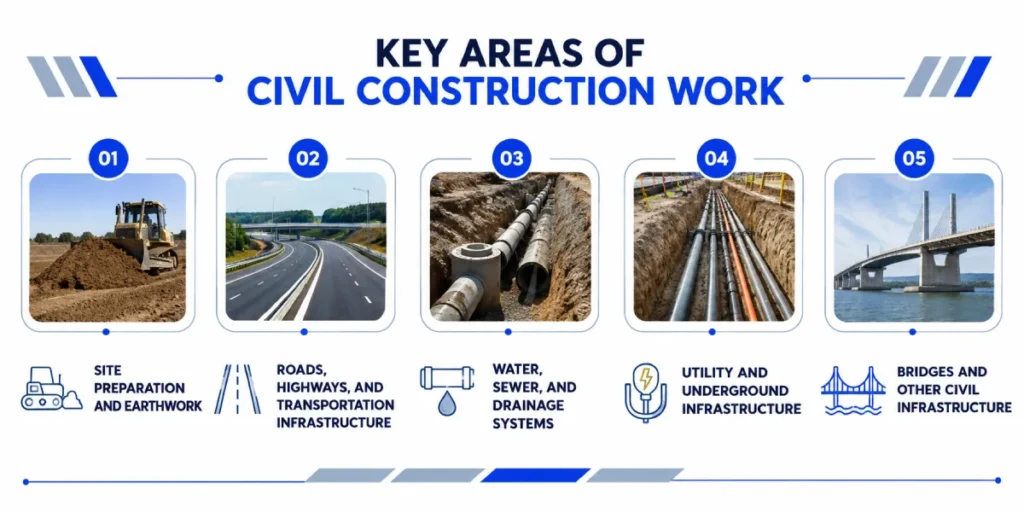
Site Preparation and Earthwork
Before any building can happen, land preparation comes first. Clearing trees, moving tons of dirt to create a level surface, and compacting the soil. So it doesn’t shift under the weight of a new road or bridge.
Roads, Highways, and Transportation Infrastructure
This is the most visible type of civil work. Laying down asphalt for local streets. Building multi-lane interstate highways and creating the tunnels and interchanges for smooth traffic.
Water, Sewer, and Drainage Systems
Civil teams are responsible for the hidden systems beneath our feet. They install the pipes for fresh water from reservoirs to homes. Also, sewer lines that carry waste away to treatment plants.
Utility and Underground Infrastructure
Beyond water, civil construction involves laying the groundwork for energy. This includes digging trenches for natural gas lines. And burying high-voltage electrical cables or fiber-optic lines for high-speed internet.
Bridges and Other Civil Infrastructure
Bridges are some of the most complex civil projects. They need deep underwater foundations and precise engineering to span long distances. At the same time, they must carry the weight of thousands of vehicles every day.
What Are the Types of Civil Construction?
Because the field is so vast, it is often broken down into specific categories based on the environment and the project goal.
| Type | What It Covers | Examples |
| Transportation construction | Infrastructure for movement | Roads, highways, bridges |
| Water and sewer construction | Water management systems | Sewer lines, treatment systems |
| Utility construction | Essential utility networks | Water, gas, electrical |
| Environmental construction | Projects supporting environmental management | Drainage, remediation |
| Heavy civil construction | Large-scale infrastructure | Dams, tunnels, major bridges |
| Site development | Preparing land for development | Grading, utilities, drainage |
Transportation and Road Construction
This focuses on the movement of people and goods. It involves not just the road surface alone. But the signage, lighting, and safety barriers that make travel possible and safe.
Water and Sewer Infrastructure Construction
These projects focus on public health. Civil construction builds massive pipelines and treatment plants. Civil construction ensures that clean water is always available. Also, it ensures safe waste disposal methods.
Utility and Underground Construction
This type of work is all about connectivity. It involves the careful coordination of gas, power, and data lines. Most importantly, this type of work occurs in crowded urban areas where space beneath the street is limited.
Heavy Civil Construction
Heavy civil work involves the “giants” of the industry. Massive projects like hydroelectric dams or underwater tunnels. Heavy civil construction needs years of planning and specialized heavy machinery.
Site Development and Civil Work
This is the bridge between the raw land and a finished building. Site development means grading the land and installing the initial pipes and roads. After this, a commercial or residential builder can begin their work.
What Does a Civil Engineer Do in Civil Construction?
A civil engineer is the brain behind the project. The engineer ensures that the work is safe, legal, and functional.
The role involves planning the layout and designing the technicalities of the project. They perform site assessments to check for environmental risks. Besides, surveying tools to map the land.
Civil engineers also write the project specifications. These are the “rules” the contractors must follow. They check the quality of materials, implement quality management processes to ensure work meets the required standards, and ensure the team is complying with all safety and environmental laws.
Civil Construction vs. Civil Engineering: What’s the Difference?
While the two fields work together, they represent different sides of the same coin. Engineering is about the “why” and “how,” while construction is about the “do.”
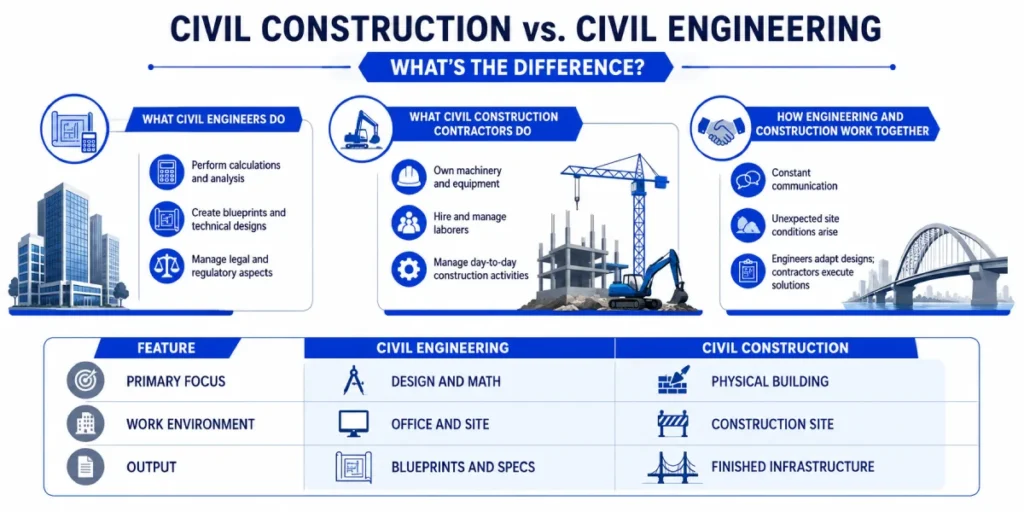
What Civil Engineers Do
Civil engineers spend most of their time in offices and on-site performing calculations. They create blueprints and manage the legal side of the project. They focus on the math and physics behind the structure.
What Civil Construction Contractors Do
Contractors are the ones who own the machinery and hire the laborers. They take the engineer’s blueprints and turn them into a reality. Also, manage the day-to-day physical work and equipment.
How Engineering and Construction Work Together
The two groups must communicate constantly. A contractor may hit an unexpected rock layer while digging. The engineer must redesign the foundation according to the new ground conditions.
| Feature | Civil Engineering | Civil Construction |
| Primary Focus | Design and Math | Physical Building |
| Work Environment | Office and Site | Construction Site |
| Output | Blueprints and Specs | Finished Infrastructure |
Civil Construction vs. Building Construction
It is common to confuse these two, but they focus on very different outcomes. One builds the world we drive on, and the other builds the world we live in.
Civil Construction Focuses on Infrastructure
Civil work is almost always horizontal. It involves roads, pipes, and bridges. The primary materials are earth, concrete, and heavy steel.
Building Construction Focuses on Structures
Building construction is vertical. It focuses on houses, skyscrapers, and malls. It uses a wider variety of materials. Including wood, glass, and interior finishes like drywall.
Where Civil Work and Building Projects Overlap
The two meet during the “site work” phase. Before building a house ( building construction), a civil team must first clear the land, bring in the water and power lines (civil construction).
| Factor | Civil Construction | Building Construction |
| Main focus | Infrastructure and essential systems | Buildings and enclosed structures |
| Common projects | Roads, bridges, drainage, utilities, tunnels | Homes, offices, schools, stores |
| Purpose | Connects, supports, and serves communities | Provides spaces for living, working, or other activities |
| Typical work | Earthwork, grading, paving, utility installation | Foundations, framing, roofing, interiors |
| Project scale | Often large-scale and spread across wider areas | Usually centered on a specific building site |
| Key professionals | Civil engineers, surveyors, contractors, equipment operators | Architects, structural engineers, builders, contractors |
| Examples | Highways, sewer systems, water networks, bridges | Houses, apartments, commercial buildings |
What Are the Main Phases of Civil Construction Work?
Every project follows a standard lifecycle. This ensures that the massive budgets involved are spent wisely and that the final result is safe for the public.
Planning and Site Investigation
This is the research phase. Teams look at the soil, the water table, and the surrounding environment to see if the project is possible.
Design, Engineering, and Approvals
Engineers draw the blueprints and submitted to the government. Nothing moves forward until the city or state gives legal permission to build.
Estimating and Bidding
Contractors look at the plans and figure out how much the labor and materials will cost. The project owner then chooses the best team for the job.
Site Preparation and Civil Work
Civil construction clears the land, and the “heavy lifting” begins. This includes grading the dirt and digging the trenches for the main infrastructure.
Construction and Installation
The actual structure, whether a road, bridge, or pipe network. This is the longest phase of the project.
Inspection, Testing, and Project Completion
Before the project becomes open to the public, every part is tested. For example, checking water pipes’ pressure and bridge supports for stability.
What Materials and Equipment Are Used in Civil Construction?
The scale of civil work requires materials and machines that are much larger and stronger than those used in standard home building.
Common Civil Construction Materials
Reinforced concrete is the most common material because it can handle immense pressure. Asphalt is used for roads because it is flexible and easy to repair. Large-scale structural steel and high-density plastic pipes are also staples of the industry.
Equipment Used for Civil Construction Work
You will see massive excavators for digging. Bulldozers for moving earth. And pavers for laying roads. Construction uses cranes for bridges and trenchers to lay miles of underground pipe.
What Is Civil Construction Safety?
Because the equipment is so large and the projects are so complex, safety is the number one priority. A single mistake on a civil site can have catastrophic consequences.
Common Safety Risks on Civil Construction Sites
Risks include trench collapses, accidents involving heavy machinery, and falls from high bridges. There is also the risk of hitting existing underground power or gas lines.
Safe Equipment and Site Practices
Workers must wear high-visibility gear and hard hats at all times. Sites are often fenced off to keep the public away from dangerous machinery.
Why Safety Planning Matters
A good safety plan prevents injuries and keeps the project on schedule. If an accident occurs, the site is usually shut down for an investigation. This can cost thousands of dollars a day.
What Challenges Can Affect Civil Construction Projects?
Even with perfect planning, civil projects are at the mercy of the environment. Builders must be ready to adapt to whatever the earth throws at them.
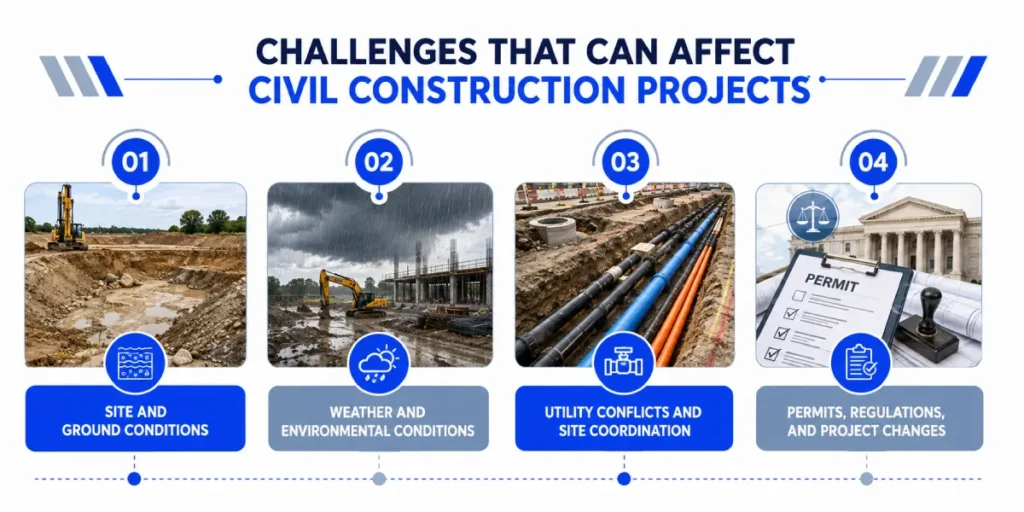
Site and Ground Conditions
If the soil is too soft or if there is unexpected bedrock, the entire design might have to change. Underground water can also wash away completed work.
Weather and Environmental Conditions
Heavy rain can turn a site into a mud pit, making it impossible for heavy machines to move. Extreme heat can also prevent concrete from setting.
Utility Conflicts and Site Coordination
In older cities, maps of underground pipes are often inaccurate. A crew may start digging and find a 100-year-old pipe that wasn’t on the map.
Permits, Regulations, and Project Changes
New environmental laws or changes in government leadership can delay funding. Any new rule can change the project duration.
Why Is Civil Construction Important?
Civil construction is the foundation of modern life. It supports civil infrastructure by creating the systems we use every day. It connects communities through roads and bridges. Also provides essential utilities like water and power. Without civil construction, residential and commercial construction development would be impossible. Without it, we would have no way to transport goods or power buildings.
FAQs
What is the meaning of civil construction?
Civil construction is a branch of construction that deals with designing and building public utilities like roads and bridges.
What Is Civil Infrastructure?
Civil infrastructure is the essential physical systems that support communities and everyday life. Examples are roads, bridges, drainage networks, water and sewer systems, utilities, tunnels, and other structures. Civil infrastructure keeps communities connected and functioning.
What’s the difference between construction and civil construction?
General construction builds houses and offices. Whereas civil construction builds the roads, bridges, and utilities that support them.
What are examples of civil construction?
Examples include highways, dams, airports, water treatment plants, and tunnels.
Can civil engineers work in construction management?
Yes, many civil engineers move into management to oversee the physical building process.
Can civil engineers be contractors?
Yes, many engineers start their own firms to build the projects they design.
Is civil construction a good career?
Yes, it offers high pay and job stability because infrastructure is always in demand.
What is heavy civil construction?
Heavy civil refers to massive projects like dams or major bridges that need specialized heavy equipment.
What are examples of civil infrastructure?
Public roads, sewer systems, the power grid, and public transportation networks.
What is civil work?
Civil work is the physical labor, such as grading and pipe laying, required to prepare a site for use.
Final Thoughts on Civil Construction
Civil construction is a vital industry that literally shapes the world around us. By building the roads we drive on, the pipes that bring us water, and the infrastructure that protects our environment, civil construction teams ensure that our modern way of life remains possible. But what is heavy civil construction? It can be a small local drainage project or a massive interstate highway. Either way, civil construction remains the essential foundation of all human development.