Construction quality management is the system that helps a building project stay on track and get built the right way. It covers each step, from the first plan to the last walkthrough. It makes sure the work meets code, meets the contract, and lasts for many years. This is the core of what construction management is for any serious builder.
This guide walks you through every part of construction quality management. You will learn what it is, why it matters, how the process works, who does what, and how to build a strong quality management plan for your next job. Along the way, we will also touch on construction project management and what a project manager in construction really does.
What Is Construction Quality Management?
Before we go deeper, let us answer the main question. What is construction quality management, and why does every good contractor use it? It sits inside the wider world of construction project mgmt, working next to safety, budget, and schedule.
Construction Quality Management Definition
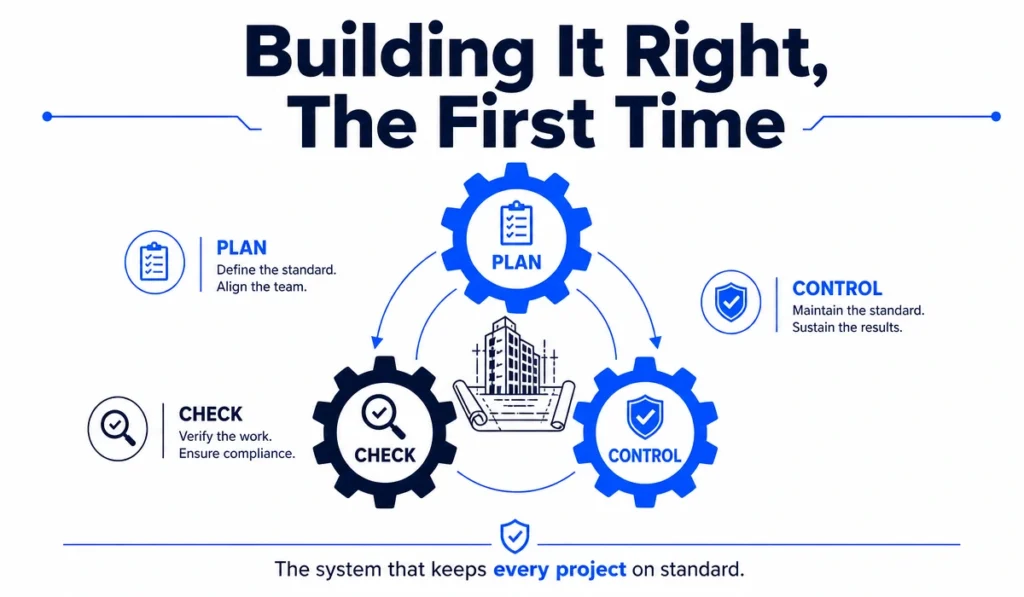
Construction quality management is the process of planning, checking, and controlling the quality of work on a project. It makes sure the finished building matches the plans, the specs, and the codes it must follow. In short, it is how a team proves the work is done right, not just done fast. In one line, construction management is the practice of guiding a job from start to finish, and quality is a big part of that.
Goals of Construction Quality Management
- Meet the standards set in the contract and the drawings.
- Cut down on rework, waste, and lost time.
- Keep the project safe for workers and future users.
- Protect the schedule by finding problems early.
- Build trust with the owner and the design team.
Quality Management Throughout the Project Lifecycle
Quality management in construction is not a one- time job. It runs through every phase, from design, to ordering materials, to the last coat of paint. Each phase has its own checks, but they all point to the same goal. That goal is a building that works the way it should. This is a key answer to the question of what is quality management in construction.
Why Construction Quality Management Is Important
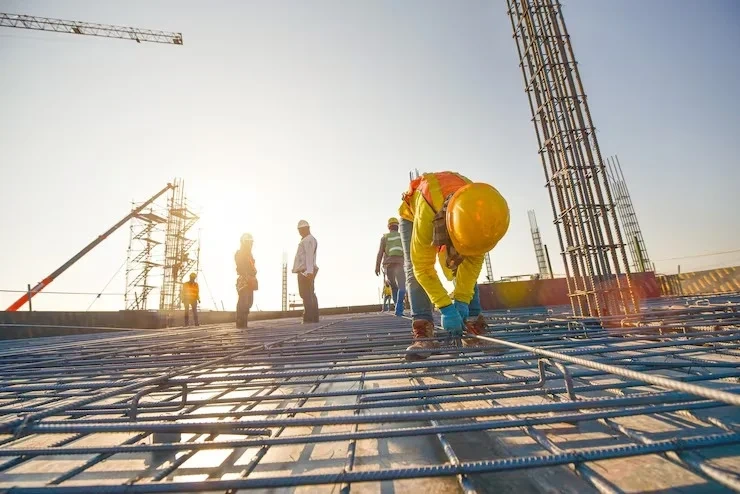
Quality management is not extra paperwork. It protects the budget, the construction schedule, and the people who will use the building. Here is what a strong program actually does for a project, and why it matters for anyone learning how to manage construction.
Improves Project Quality
Steady checks and clear standards mean the finished work matches what was promised. This is the whole point of quality management in construction. The owner gets a building that works the way they expected from day one.
Reduces Costly Rework
Catching a mistake during a routine check is far cheaper than fixing it after the wall is closed up or the concrete has set. Good quality control in construction management catches these issues early, before they turn into big repair bills.
Improves Safety
Poor work is not just a quality problem. It can also be a safety risk. A loose railing, a weak weld, or a bad wiring job can hurt workers and future users. Quality checks help find these issues before anyone gets hurt on the job.
Keeps Projects on Schedule
Rework eats up time fast. When a job passes its check the first time, the schedule stays intact and the next trade can move in without delay. That is why construction project management leans hard on quality.
Increases Client Satisfaction
Owners remember how a project turned out. A building that is built with care and finished to spec builds trust, and that trust often leads to more work down the road. Happy owners tell other owners.
Protects Contractor Reputation
Word travels fast in the construction world. A strong record of quality management helps a contractor win more bids and build a name that owners trust. A bad record does the opposite very quickly.
Supports Regulatory Compliance
Building codes and safety rules are not optional. A solid quality management system keeps a project in line with local codes, OSHA rules, and other legal steps. This is one big reason to define construction management as a rules driven job.
Improves Long-Term Building Performance
A building is meant to last for many decades. Careful quality control during construction leads to fewer breakdowns, fewer repairs, and a longer life for the finished building. Good work now saves money later.
The Three Components of Construction Quality Management
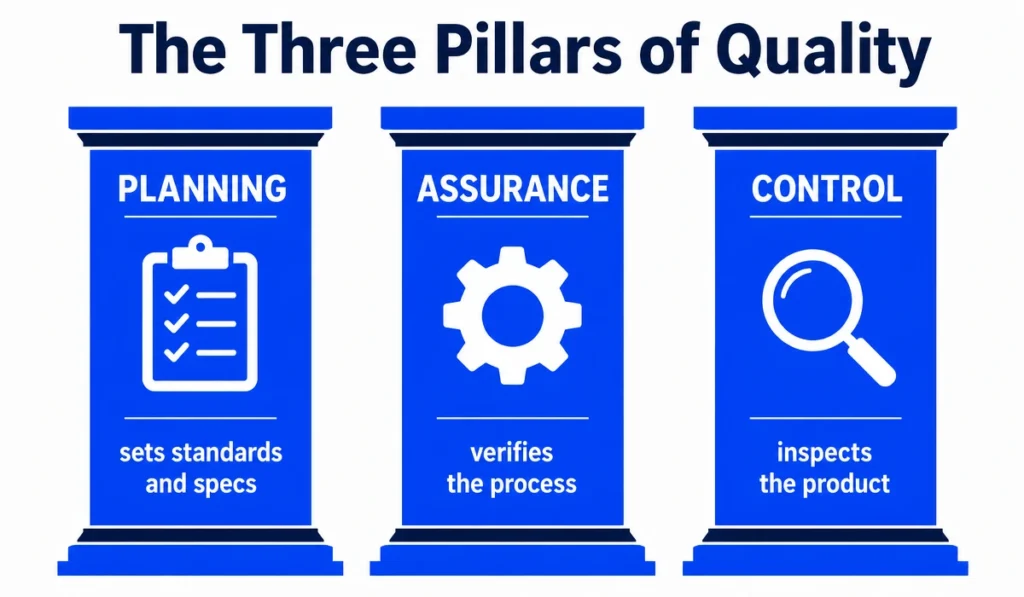
Construction quality management is built on three main parts. Each one plays a different role, but together they form one full system. This is what construction management does at its core.
Quality Planning
Quality planning happens before work even starts. It sets the standards the whole project will follow, and answers the question of what is a construction management plan.
- Defining quality objectives
- Project requirements
- Specifications
- Acceptance criteria
Quality Assurance (QA)
Quality assurance is focused on the process. It is less about checking a finished wall and more about making sure the right steps are being followed all the way through the job.
- Process-focused activities
- Documentation
- Audits
- Training
- Preventive measures
Quality Control (QC)
Quality control is focused on the product. It looks at the finished work itself and checks it against the plan. This is a hands on part of what does a construction manager do on a daily basis.
- Product-focused inspections
- Material testing
- Workmanship inspections
- Final verification
Construction Quality Management Checklist
A checklist keeps a project from slipping through the cracks. It turns a big, tricky process into a simple set of steps anyone on the team can follow. Use this list to check your project’s progress from the first plan to the final handover.
Project Planning Is Complete and Quality Objectives Are Set
Before work starts, the team should agree on clear quality goals. This gives everyone a shared standard to build toward and stops confusion once work begins on site.
Materials Are Reviewed and Approved Before Use
Every material should be checked against the approved specs before it goes into the building. This step stops the wrong or lower grade product from ending up in the finished work.
Contractors and Subcontractors Are Qualified and Vetted
Only trades with proven skills and a solid track record should be on the job. Vetting up front cuts down the chance of poor work later on in the project.
Site Inspections Are Scheduled and Carried Out Regularly
Regular checks catch problems while they are still small and cheap to fix. Waiting until the end of a project to look at the work is always more costly.
Required Testing Is Completed and Results Are Recorded
Materials and systems should be tested against agreed standards, like concrete strength or weld quality. Recording the results creates proof the work meets what was needed.
All Work Is Documented With Reports, Photos, and Approvals
Clear records protect everyone involved if a question or dispute comes up later. Photos and reports also make it easy to track progress across the whole build.
Corrective Actions Are Tracked and Verified
When an issue is found, the fix should be logged, done, and checked again. This closes the loop and confirms the problem is really solved for good.
A Final Inspection Confirms the Work Meets Every Standard
Before handover, a full check should compare the whole project against the contract and the plans. This is the last checkpoint before the owner takes over.
Handover Documents Are Complete and Ready for the Owner
The final package should include every report, approval, and warranty the owner needs. Complete papers make the handoff smooth and give the owner peace of mind.
Construction Quality Management Plan Explained
What Is a Quality Management Plan?
A construction quality management plan is a written paper that lays out how quality will be handled on a project. It becomes the guidebook every person on the job follows to keep the work steady and correct. This is exactly what is a construction management plan in real life.
What Should It Include?
- Quality objectives
- Inspection procedures
- Testing requirements
- Material approval
- Responsibilities
- Reporting
- Documentation
- Acceptance criteria
- Non-conformance procedures
Sample Quality Management Plan Structure
A typical quality management plan construction teams use starts with the project scope. Then it lists the standards being followed, the inspection schedule, the testing plan, and the names of people in charge of each part. It closes with a section on how problems will be reported, fixed, and checked again.
Construction Quality Standards You Should Follow
Quality standards give a project something solid to measure against. Here are some of the most common ones used across the industry today.
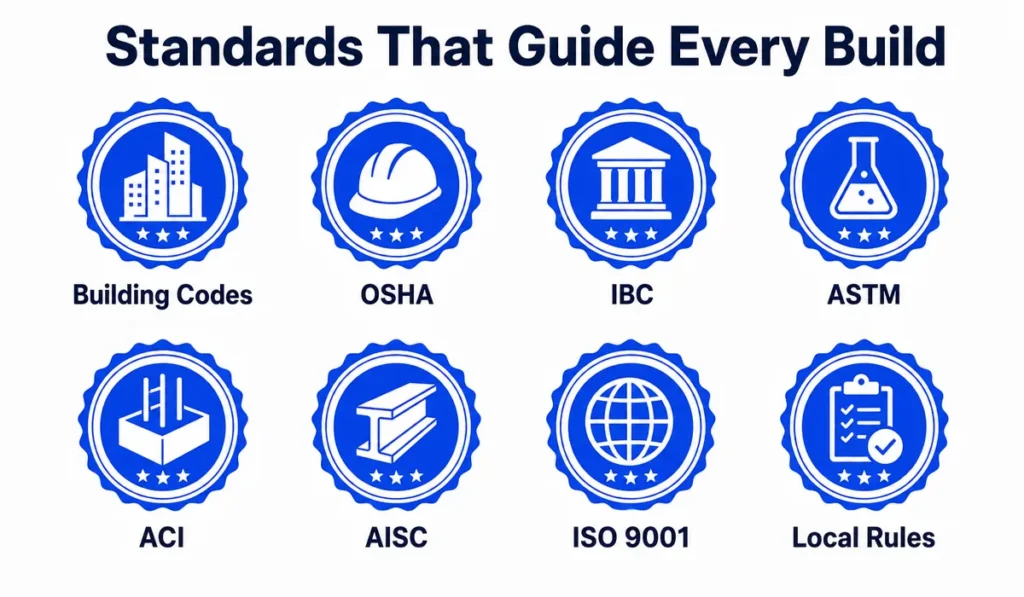
Building Codes
Local and state rules that set the smallest safe requirements for construction. They cover everything from structural safety to fire protection and accessibility.
OSHA Safety Standards
Federal rules that protect workers on the job site every single day. Following them is a key part of effective construction safety management. It helps prevent injuries, maintain a safe workplace, and keep the project in legal compliance.
International Building Code (IBC)
A widely used model code that many local codes are built from. It gives cities and states a consistent starting point for their own regulations.
ASTM Standards
Technical standards for testing materials such as concrete, steel, and soil. These tests confirm a material actually performs the way it is supposed to.
ACI Standards
Standards from the American Concrete Institute that guide concrete design and testing. They help ensure concrete work holds up under real-world conditions.
AISC Standards
Standards from the American Institute of Steel Construction for structural steel work. They cover everything from fabrication to installation of steel framing.
ISO 9001 Quality Management
A worldwide standard for quality management systems used in many industries, construction included. It focuses on consistent processes rather than one-time inspections.
Local Regulations
City and county rules that can add extra requirements beyond national codes. Builders need to check local rules closely, since they can vary a lot from one area to the next.
Construction Quality Assurance Activities
While quality control checks the finished work, quality assurance checks the process behind it. Both work together in the full construction management process.
Process Audits
Reviewing how work is being done to confirm the right steps are being followed.
Documentation Reviews
Checking that reports, test results, and approvals are complete and correct.
Contractor Qualification
Confirming that contractors and subcontractors have the skills and history to do the work right.
Supplier Evaluation
Reviewing suppliers to make sure materials will meet the standard the job needs.
Staff Training
Making sure every worker knows the quality standards for their part of the job.
Continuous Improvement
Using lessons from past projects to make the next one run smoother.
Quality Management Across Every Construction Phase
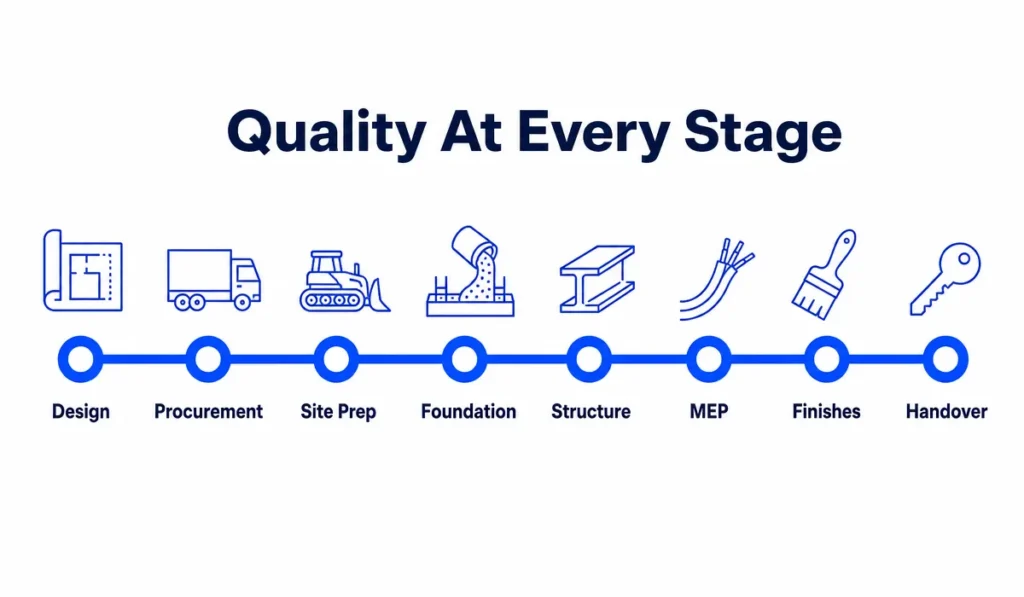
Quality checks look different at every stage of a project. This table gives a quick look at what to watch for in each phase of the work.
| Phase | What to Watch For |
| Design Phase | Reviewing drawings and specs for errors before construction even starts on site. |
| Procurement Phase | Confirming that ordered materials match the approved specs and show up on time. |
| Site Preparation | Checking that the site is graded, cleared, and ready to build on in a safe way. |
| Foundation | Testing soil and concrete to confirm the base of the building is strong and solid. |
| Structural Construction | Inspecting framing, steel, and load bearing work for strength and accuracy. |
| Mechanical, Electrical, Plumbing (MEP) | Testing systems like wiring and pipes to confirm they work in a safe way. |
| Interior Finishes | Reviewing paint, flooring, and fixtures for a clean, correct final look. |
| Commissioning | Testing every system as a whole to confirm the building runs the way it should. |
| Project Handover | Final checks and papers that confirm the building is ready for the owner. |
Common Quality Problems in Construction
Even with a strong plan, problems can still show up. Knowing the most common ones helps a team stay ahead of them before they grow into costly delays or rework.
Poor Workmanship
Work that does not meet the skill level or standard the job needs. This often shows up as sloppy finishes, uneven surfaces, or steps done out of order.
Material Defects
Materials that show up damaged or do not match the spec. Using them anyway can weaken the structure or force a costly replacement later.
Design Errors
Mistakes in the drawings or plans that cause problems during construction. These errors are cheaper to catch early than after work has already started.
Inadequate Inspections
Checks that are skipped or rushed, letting issues slip past the team. Over time, small missed defects can add up into serious quality failures.
Poor Communication
Confusion between teams that leads to mistakes and more rework. A missed detail passed from one crew to the next can throw off an entire phase of work.
Incomplete Documentation
Missing records that make it hard to prove work was done the right way. Without solid documentation, disputes over responsibility become harder to resolve.
Schedule Pressure
Rushing work to hit a deadline, which can hurt the quality of the finish. Cutting corners to save time often costs more in rework down the line.
Lack of Skilled Labor
Not enough trained workers on hand to do the job to the right standard. Inexperienced crews are more likely to make mistakes that slip through unnoticed.
How to Improve Construction Quality Management
Improving quality management is an ongoing effort. These steps are a good place to start when you are learning how to manage construction quality the right way.
Create Clear Quality Standards
Write down what counts as acceptable work, so there is no confusion later. Clear standards give every trade the same target to build toward from day one.
Improve Communication
Keep every team updated on standards, changes, and issues in real time. Fast, clear updates stop small misunderstandings from turning into costly mistakes.
Use Digital Documentation
Move away from paper and use apps that make records easy to find and share. Digital records also cut down on lost paperwork and missed updates.
Conduct Frequent Inspections
Check work often, not just at the biggest milestones on the schedule. Regular checks catch small issues while they are still easy and cheap to fix.
Train Workers
Make sure every crew member knows the quality expectations for their task. Well-trained workers make fewer mistakes and need less rework.
Standardize Checklists
Use the same checklist format across the project so nothing gets missed. Consistent checklists make it easier to compare results across different crews and phases.
Review Lessons Learned
Look back at past projects to spot patterns and fix them going forward. This turns old mistakes into useful lessons instead of repeat problems.
Monitor KPIs
Track key numbers, like rework rate, to see if quality is really getting better. KPIs give the team hard evidence instead of just a gut feeling about progress.
Frequently Asked Questions
What is construction quality management?
Construction quality management is the process of planning, checking, and controlling work on a construction project so it meets the contract, the codes, and the owner’s expectations. It sits inside the wider job of construction project management.
What is the difference between quality assurance and quality control?
Quality assurance focuses on the process, making sure the right steps are followed. Quality control focuses on the product, checking the finished work itself against the plan.
Who is responsible for quality management on a construction project?
It is a team effort. The project manager, construction manager, quality control manager, and every contractor on site all share the responsibility for quality.
What is a construction quality management plan?
It is a written paper that lays out the standards, inspections, testing, and duties that will guide quality on a project from start to finish.
Why is documentation important in construction quality management?
Documentation proves the work was done in the right way. It protects everyone involved if a dispute or a defect comes up later on.
What are the main quality standards in construction?
Common standards include local building codes, OSHA rules, the International Building Code, ASTM, ACI, AISC, and ISO 9001.
How often should quality inspections be performed?
Inspections should happen often through a project, not just at the start and the end. Many teams inspect daily or at key milestones.
What is an NCR in construction?
An NCR, or non-conformance report, is filed when work does not meet the required standard. It records the issue and tracks the fix through to the end.
How do you measure construction quality?
Quality is measured through KPIs like rework rate, defect density, inspection pass rate, and customer satisfaction feedback.
Final Thought
Every commercial construction project needs a well built quality management system. Without one, small problems turn into big, costly ones, and trust between the owner and the builder starts to break down fast. A strong QA and QC process does more than catch mistakes. It lowers risk, keeps costs in check, improves safety, and leads to a building that performs well for many years after the ribbon is cut.
If you are planning a project, it pays to work with experienced commercial general contractors who have a written quality management process in place. Look for teams that understand the full construction management process, know the different types of construction management such as construction manager at risk, and can show you clear records. That one choice can save you time, money, and a lot of stress down the road.