Material prices do not sit still anymore. Through April 2026, construction input prices had already climbed 6.2%. That is more than they moved over the entire previous three years. A frame or a facade priced in January may cost noticeably more by the time it ships.
That is why how to choose construction materials is not only an engineering question these days. It shapes the budget as well, and now and then the schedule. The pages ahead lay out the main types of construction materials, what actually matters before you commit, and the places where commercial construction materials can quietly make or break the number.
The Common Types of Construction Materials
Step inside most commercial buildings, and a short list of core materials is doing most of the work. Every commercial building material plays to its own strength, which is why jobs almost always blend them. The frame may be steel, the walls masonry, the interior something lighter still.
The building materials categories below are the ones you will run into most, each lined up with the work it handles best.
| Material | What it is best at | Where it shows up |
| Concrete | Compression strength, mass, fire resistance | Foundations, floors, structural frames |
| Structural steel | High strength, long spans, speed | Frames, long-span roofs, taller buildings |
| Brick and block masonry | Long life, fire-rated, low upkeep | Load-bearing and exterior walls |
| Wood and mass timber | Lighter weight, renewable, warm finish | Framing, feature structures, interiors |
| Glass and cladding | Daylight, weather skin, appearance | Curtain walls, storefronts, facades |
| Composites | Corrosion resistance, lightweight | Cladding panels, rebar, specialty parts |
(Use the table as a rough guide, not a spec. A material that fits one project can be the wrong pick on the site next door. Soil, loads, even the budget all nudge the answer in a different direction.)
How to Choose Construction Materials
No material wins on every front. Take concrete. It is strong and cheap to maintain, but heavy, and hard on the climate to make. Or steel, which raises a frame fast and spans far, yet rides the commodity market up and down.
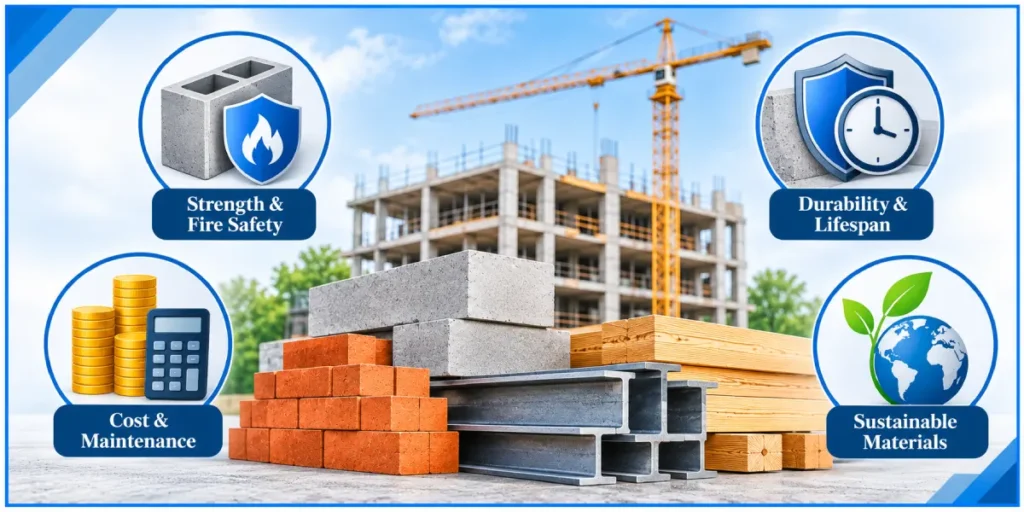
So that is the real puzzle. How to choose construction materials comes down to scoring a few factors for your own project, then backing the material that wins the most of them. The ones that count most are below.
Strength, Fire, and Code
Start with two things: what the structure has to carry, and what the code will allow. Whatever you choose has to handle the loads, hit the fire rating for that occupancy, and satisfy the local building code. Nothing else matters until it does. Most of this gets locked in early, with your structural engineer, back in preconstruction.
Durability and Service Life
This is where durable construction materials earn back their price. Go cheap on something you rip out in fifteen years, and the running total can beat the costlier option that quietly lasts fifty.
Exposed to the weather, durable building materials such as concrete, masonry, and galvanized or stainless steel last for decades and ask for almost nothing. Wood can go the distance too, but only when it is detailed and protected with care.
Construction Material Cost, Up Front and Over Time
Price is the factor everyone watches, and for good reason. Over the year to April 2026, nonresidential input prices climbed 7.4%, with iron and steel leading the jump. Even so, that sticker price is only half of what a material really costs.
Construction material cost is more than the quote. It is the labour to install it, the upkeep later, and the days it adds or saves on the schedule. A solid construction estimate weighs all of that, not the unit price alone. And keeping an eye on building material costs against the budget, as the design firms up, keeps the nasty surprises small.
Environmentally Friendly and Renewable Options
These days, owners bring up sustainability on their own. And it adds up. Buildings and construction are responsible for about 37% of global emissions, a big share of it sitting in the materials themselves. So environmentally friendly construction materials are worth a real look.
Recycled steel is an easy place to start. Remelting it uses 60 to 80% less energy than making it from ore.
Mass timber, one of the better-known renewable construction materials, actually locks carbon away rather than giving it off. None of this means weaker buildings anymore, so environmentally friendly materials for construction belong on the list.
A Simple Way to Weigh the Trade-offs
No ranking exists that puts one material permanently above the rest. Sound construction material selection means fitting each one to the job at hand, then testing it against cost, lifespan, and the carbon it carries across the building’s whole life. If you want one rule for how to select building materials, it is this.
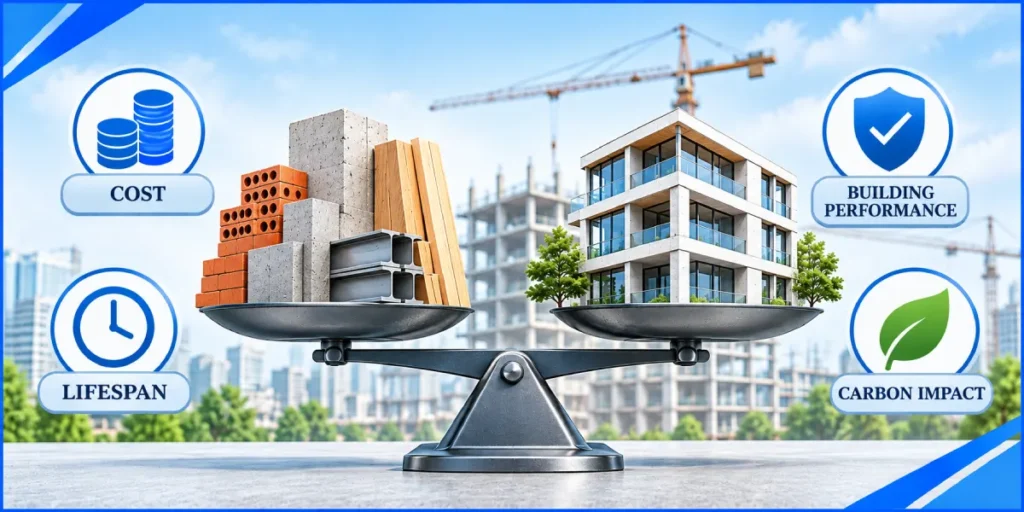
Picture what the building has to do over the next fifty years, and spend against that, not against the cheapest bid on day one. Any building materials guide, this one included, should sharpen the questions you ask, never stand in for your engineer.
FAQs
The same few questions come up on almost every project, usually before the budget is locked. Below are quick answers to the ones that come up most.
What are the most common construction materials?
On a commercial build, the common construction materials are concrete, steel, masonry, wood, and glass, with composites gaining ground each year. Hardly any building sticks to one. Steel and concrete do the structure, while masonry or glass wraps it. Lighter materials handle the finishes.
What is the most durable building material?
Honestly, nothing takes the title outright. For exposed, low-upkeep commercial use, concrete and masonry are tough to beat, with stainless or galvanized steel right alongside. What matters more is detailing. The most durable building materials are the ones specified correctly for their spot, since even the best of them give out once water finds a way in.
Are environmentally friendly construction materials more expensive?
Sometimes they are, but that gap keeps closing. Recycled steel and a lot of low-carbon concrete mixes now land near conventional prices. And the longer view helps. Renovating an existing building can cut emissions 50 to 75% against new construction, which tends to save money as well. More and more, environmentally friendly construction materials win on price, not just on principle.
How do material choices affect construction cost?
More than the invoice lets on. Construction material cost runs through the entire job. Yes, the unit price, but also how quickly it installs, the upkeep it needs down the line, and how its price moves with the market. With input costs up 6.2% in early 2026 alone, pinning down material choices early is among the easiest ways to guard a budget.
Final Thoughts
Material choices look small on a drawing. They are anything but. The frame sets your schedule. The cladding sets the energy bill. The finishes set what a tenant notices walking in. None of that should come down to whoever quoted the cheapest that week.
Weigh strength, durability, cost, and carbon together, and the building pays you back for years. For commercial and institutional projects across Schaumburg and the Northwest suburbs, Epic Construction Management helps owners make these calls early, while they are still cheap to make.