Construction project planning is the work that turns drawings and a budget number into a clear path to finish a job. It covers every part of a project, from the first check to see if the job makes sense to the final walk-through at the end. Strong construction management helps teams organize resources, control costs, manage schedules, and keep the project moving toward completion.
This guide explains what construction project planning means, the phases every job goes through, the parts a good plan needs, and the mistakes that can trip up even skilled teams.
What Is Construction Project Planning?
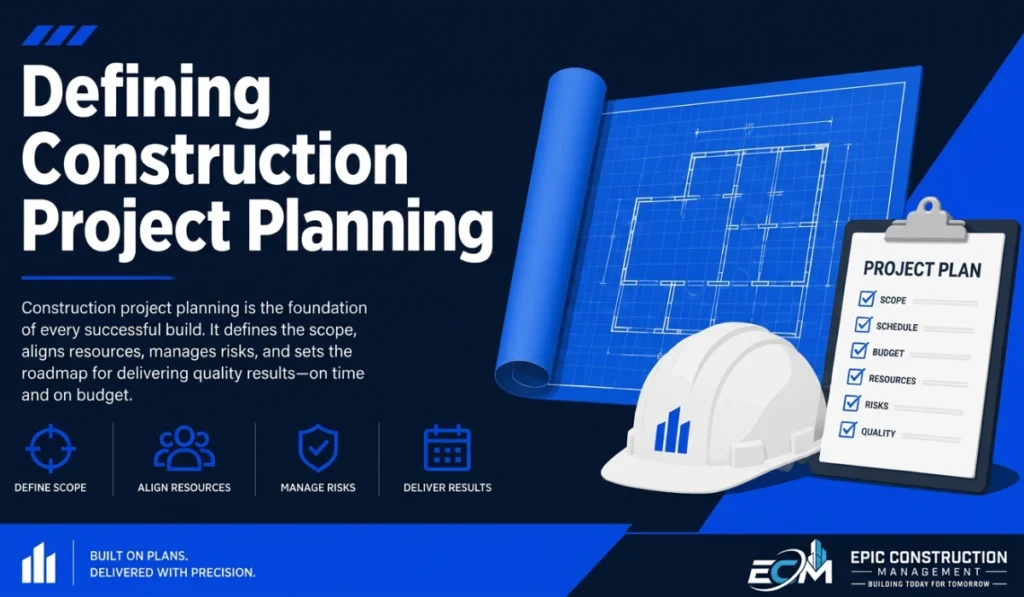
Construction project planning is the process of deciding how a project will be built. It answers what work needs to be done, in what order, by whom, and with what tools and materials. It covers project scope, budget, schedule, quality, safety, risk, and how the team talks to each other. Planning starts well before any building begins.
The goal is simple to say but hard to do: give every person on the job a shared, clear path to the finish. A construction project plan is not a paper that gets written once and put away. It is used, updated, and talked about the whole time the job runs.
Planning starts during preconstruction, when the project is still mostly ideas and drawings. It keeps going through design, buying, building, and closeout. Each phase adds more detail to the plan and checks if the early guesses still hold up. Good construction and planning work together at every step.
Why Is Construction Project Planning Important?
A strong project plan protects a job in ways that are easy to miss until something goes wrong.
- Sets project scope. Everyone works from the same clear list of what is being built.
- Makes budgets more accurate. A detailed plan gives cost numbers built on real amounts, not guesses.
- Lowers project risks. Risks get spotted and handled on paper before they hit the site.
- Stops delays. A real schedule keeps tasks moving in the right order and on time.
- Improves talk between the team. A shared plan keeps owners, designers, and crews on the same page.
- Backs quality work. Clear standards go into the plan from day one.
- Boosts safety. Hazards get spotted and handled before work starts, not after someone gets hurt.
- Uses resources better. Labor, gear, and materials go where they are really needed.
- Raises the chance of success. Jobs that are planned well are more likely to finish on time and on budget.
The size of the problem is well known. Studies on building work have found that many big jobs run over budget or behind schedule, often by a lot. Planning is not the only fix, but it is the biggest lever a team has. Good construction plans give teams a real shot at doing it right.
Construction Project Planning vs. Construction Scheduling
These two terms get mixed up a lot, but they are not the same thing. Construction planning is the bigger job. Scheduling is one part of it.
| Construction Project Planning | Construction Scheduling |
| Sets the overall project plan | Sets project timelines |
| Covers scope, budget, quality, risk, and resources | Focuses on task order |
| Starts during preconstruction | Comes after project planning |
| Guides project work | Tracks project progress |
What Are the Main Phases of Construction Project Planning?
A construction project management moves through a set of planning phases, each one building on the last. These construction project planning steps stay pretty steady from one job to the next.
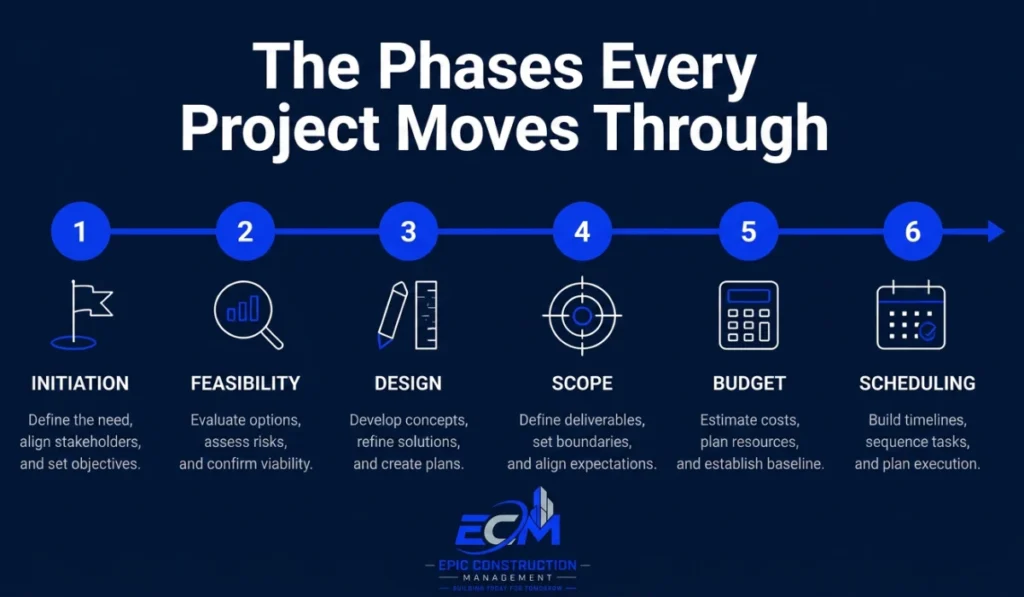
- Project Initiation
- Feasibility Study
- Site Evaluation
- Design Development
- Scope Definition
- Budget Planning
- Resource Planning
- Procurement Planning
- Scheduling
- Risk Planning
- Quality Planning
- Safety Planning
- Communication Planning
- Construction Readiness Review
Each phase feeds the next. A rushed check on if the job makes sense gives you a shaky scope. A shaky scope gives you a budget nobody can trust. The construction readiness review at the end is the last check to make sure the team is really ready to break ground.
Step-by-Step Construction Project Planning Process
Turning those phases into a real working plan follows a steady order. If you have wondered how to plan a construction project from start to finish, this is the flow. It works for a small job and for a building construction project plan on a large site.
Step 1: Set Project Goals and Objectives
Say what a win looks like before anything else gets decided. Clear goals give the whole team a shared target and keep later decisions about scope and budget grounded in reality.
Step 2: Do a Feasibility Study
Check that the project is real from a money, tech, and rules point of view. This step catches deal-breaking issues early, before real money gets spent on design or site work.
Step 3: Build the Project Scope
Write down exactly what work is included, and just as key, what is not. A tight scope keeps the budget and schedule honest and cuts down on change orders later.
Step 4: Do a Site Check
Look at soil, access, utilities, and any site issues. What the site actually offers shapes the schedule, the budget, and even the design in ways drawings alone cannot show.
Step 5: Get Cost Estimates and Budget Ready
Build a budget based on real quantities and today’s material and labor costs. A budget built on guesswork instead of real numbers rarely survives contact with the actual project.
Step 6: Make the Construction Schedule
Put the work in order and give each task a real time frame. A realistic schedule keeps trades from tripping over each other and keeps the whole project moving.
Step 7: Plan Resources and Workers
Make sure labor, gear, and materials are really there when the schedule needs them. Double-booked crews or equipment can stall a project even when the schedule itself looks solid.
Step 8: Build the Buying Plan
Spot long lead items early and order them around the schedule. Materials that take months to arrive need to be ordered long before the crew is ready for them.
Step 9: Spot and Rate Risks
Write down what could go wrong and decide how the team will act. Naming risks early turns surprises into problems the team already has a plan to handle.
Step 10: Get the Project Quality Plan Ready
Set the standards the finished work needs to hit. Clear quality targets give inspections something solid to check against instead of relying on guesswork later.
Step 11: Build the Construction Safety Plan
Spot hazards and set the rules to keep them in check. Planning for safety before work starts protects workers and helps the project avoid costly stoppages.
Step 12: Make the Communication Plan
Set who needs what info, how often, and in what form. A clear plan keeps owners, designers, and crews aligned instead of relying on scattered updates.
Step 13: Review and Approve the Project Plan
Get sign off from stakeholders before construction starts. This final check confirms everyone agrees on the plan before the cost of changing course goes up.
Key Components of a Construction Project Plan
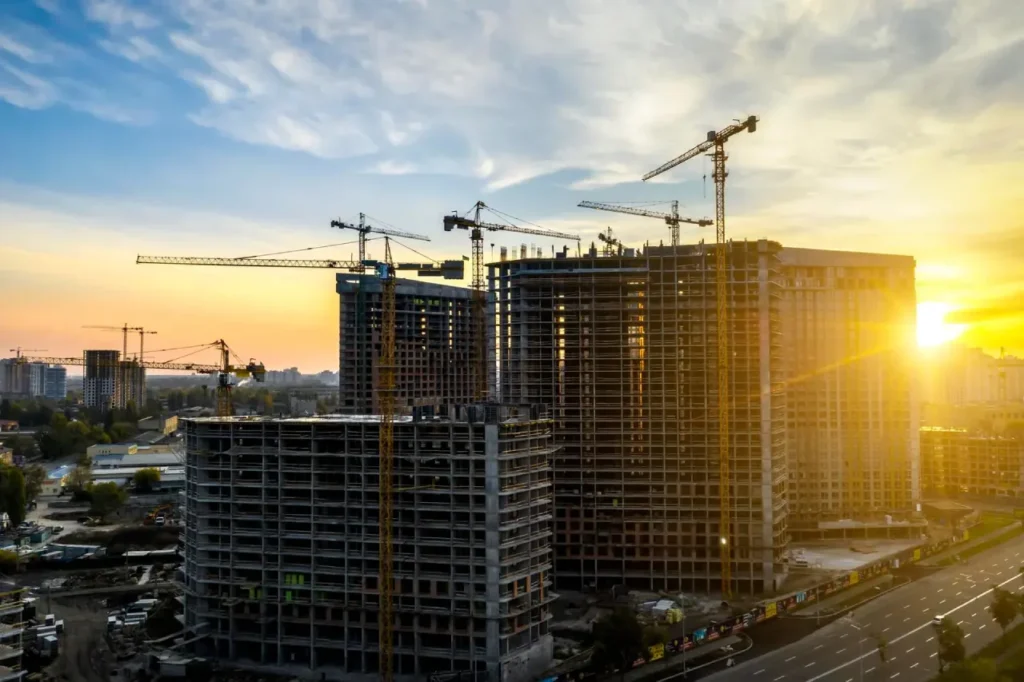
A full construction project plan is really a set of smaller plans working as one, each one covering a different piece of the job. A strong construction project development plan pulls them all together.
| Component | Purpose |
| Project Scope | Sets work needs |
| Budget | Controls project costs |
| Schedule | Sets the project timeline |
| Resource Plan | Gives out labor, materials, and gear |
| Procurement Plan | Plans buying work |
| Risk Management Plan | Spots and lowers risks |
| Quality Management Plan | Keeps building quality |
| Safety Management Plan | Keeps workers and the site safe |
| Communication Plan | Keeps stakeholders in sync |
| Change Management Plan | Controls project changes |
Construction Project Quality Management Plan
A construction project quality management plan sets the standards the finished work needs to hit and how the team will check that it gets there. It matters because quality problems caught late almost always cost more to fix than the ones caught early. This is a key part of any solid construction project implementation plan.
Quality Objectives
Clear, measurable targets set at the start of the job, so there is no doubt about what counts as good work.
QA vs. QC
Quality assurance looks at the process, making sure the right steps get followed. Quality control looks at the finished work, checking it against the plan. Together they form the qa qc plan for construction project.
Inspection and Testing Procedures
Set checks and material tests that confirm the work meets the standards in the plan.
Material Quality Requirements
Specs that say exactly what materials are okay, so weaker swaps do not end up in the building.
Documentation
Records of checks, tests, and sign offs that show the work was done right.
Non-Conformance Reporting
A set way to flag work that does not meet the standard.
Corrective Actions
The steps taken to fix a non-conformance, plus a check that the fix really worked.
Continuous Improvement
Using lessons from past jobs to raise the bar on the next one.
So what is project quality plan in construction? It is the paper that pulls all of the above into one place.
| Quality Plan Section | Purpose |
| Quality Objectives | Set quality goals |
| QA Procedures | Stop defects |
| QC Procedures | Check finished work |
| Inspection Schedule | Watch quality |
| Testing Requirements | Prove materials and workmanship |
| Documentation | Keep quality records |
Construction Project Safety Planning
Construction project safety planning starts during preconstruction, not once work is underway. Waiting until the first crew shows up to think about hazards means the plan is reacting instead of stopping problems before they start.
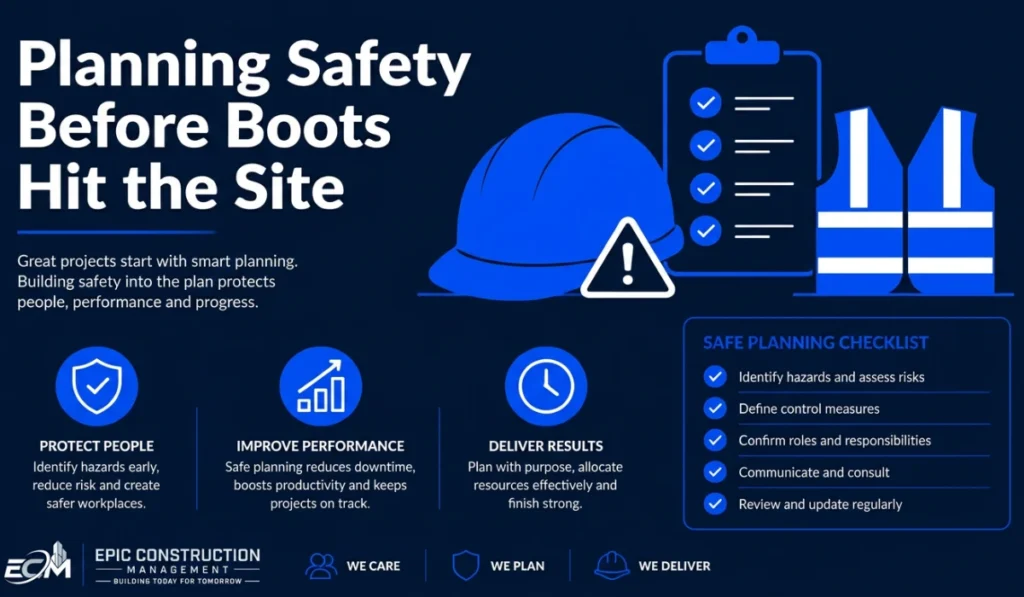
- Hazard identification. Spotting the real risks tied to the site and the type of work being done.
- Risk assessment. Ranking hazards by how likely they are and how bad the fallout would be.
- PPE requirements. Saying what safety gear is needed for each task.
- Emergency procedures. Clear steps for handling an incident, injury, or evacuation.
- Site safety rules. Standard rules that apply to everyone on site, no matter the trade.
- OSHA compliance. Meeting federal safety rules and staying ahead of checks.
- Safety inspections. Regular checks that confirm safety rules are really being followed.
- Worker training. Making sure every crew member knows the hazards and how to work around them safely.
Communication Plan in Construction Projects
A construction project communication plan matters because most project failures, if you trace them back far enough, started as a talking problem. Getting the right info to the right person at the right time keeps small issues from turning into fights. A clear communication plan in construction projects saves a lot of headaches later.
- Stakeholder communication. Keeping owners, designers, and contractors on the same page through the job.
- Reporting procedures. Standard forms for progress updates and status reports.
- Meeting schedules. Regular check ins that keep the whole team in sync.
- RFI process. A clear path for raising and answering questions about drawings or specs.
- Documentation. Keeping a record of decisions, sign offs, and changes.
- Change communication. Making sure changes to scope, schedule, or budget reach everyone who needs to know.
- Digital collaboration tools. Cloud tools that keep files and updates open to the whole team.
| Communication Activity | Responsible Party | Frequency |
| Progress Meeting | Project Manager | Weekly |
| Site Meeting | Superintendent | Daily |
| Client Update | Project Manager | Weekly |
| Safety Meeting | Safety Officer | Daily |
| Quality Review | QC Manager | As Required |
Common Challenges in Construction Project Planning
Even a well built plan runs into bumps. These are the issues that show up most often in project planning construction work, along with real ways to handle them.
- Poor scope definition. Work gets misread or missed entirely when the scope was never nailed down clearly at the start.
- Budget overruns. Costs creep past the plan when estimates were built on rough guesses instead of real numbers.
- Unrealistic schedules. Deadlines slip when durations were based on best-case speed instead of how crews actually perform.
- Design changes. Late tweaks to the drawings ripple into the budget, schedule, and already-ordered materials.
- Scope creep. Small additions add up fast when there is no formal process for pricing and approving them.
- Material shortages. Work stalls when key materials were not ordered early enough to arrive on time.
- Labor shortages. Trades fall behind when the right crews were not lined up far enough in advance.
- Delayed permits. Projects sit idle waiting on approvals that were not started early enough in the process.
- Weak communication. Mistakes multiply when updates do not reach every trade before they need to act on them.
- Poor documentation. Disputes get harder to settle when decisions and approvals were never properly recorded.
- Supply chain disruptions. A single late shipment can stall a whole sequence of dependent tasks.
- Weather impacts. Exterior work loses days when the schedule never accounted for seasonal conditions.
- Resource conflicts. Crews or equipment double-booked across tasks create bottlenecks nobody planned for.
- Inadequate risk planning. Problems catch teams off guard when risks were never identified or scored ahead of time.
Most of these issues share the same root fix: catch them on paper during planning, not on site during construction. A detailed scope, a realistic schedule, an active risk register, and a clear communication plan resolve the majority of them before they ever become a real problem.
Best Practices for Successful Construction Project Planning
These habits show up again and again on jobs that finish on time and on budget. They also form the base of a solid action plan for construction project work.
- Start planning early
- Set clear project goals
- Bring stakeholders in from the start
- Do detailed site checks
- Build real budgets
- Set schedules the team can hit
- Do regular risk checks
- Build detailed quality and safety plans
- Set a communication plan
- Use project management software
- Watch progress all the time
- Update the project plan as things change
- Write down every big decision
- Do regular planning reviews
None of these habits are complicated on their own, but together they are what separates teams that consistently hit their deadlines from teams that are always explaining why they missed one.
Common Mistakes to Avoid
A few repeat slip ups show up on jobs that struggle, no matter the size or budget. Most are avoidable with a bit more care early on, but they keep coming back because they are easy to miss under schedule stress.
- Starting construction without a full plan
- Underestimating project costs
- Ignoring project risks
- Poor communication
- Weak documentation
- Delaying procurement
- Failing to update schedules
- Overlooking quality planning
- Treating safety as an afterthought
- Not bringing subcontractors in early
Most of these slip ups trace back to the same root cause: rushing past planning to get to construction faster. Slowing down at the start almost always saves time and money later.
Frequently Asked Questions
What is construction project planning?
It is the way of setting how a construction project will be built, covering scope, budget, schedule, quality, safety, risk, and communication before and during the build.
What is included in a construction project plan?
A full plan usually has the project scope, budget, schedule, resource plan, procurement plan, risk plan, quality plan, safety plan, communication plan, and change plan.
How do you plan a construction project?
Start by setting goals and scope, then build out the budget, schedule, resource plan, and risk plan before construction starts. Then review and approve the full plan with stakeholders. That is the short answer to how to plan a construction project.
What are the main steps in construction project planning?
The flow covers setting goals, doing a feasibility study, building scope, site check, budget, schedule, resource and buying plans, risk and quality plans, safety plan, and final plan sign off.
What is a construction project quality management plan?
It is a paper that sets quality goals, QA and QC steps, inspection and testing needs, and how non-conformances get fixed.
What is a QA/QC plan for a construction project?
It is the part of the quality plan that splits process focused quality assurance from product focused quality control, giving the team a clear way to stop and catch defects.
Why is safety planning important in construction projects?
Because building sites carry real hazards, and spotting and handling them before work starts keeps workers safe and keeps the job moving without incidents or delays.
What is a communication plan in construction projects?
It sets who needs what info, how often, and by what channel, keeping owners, designers, and crews in sync through the job.
What is the difference between project planning and scheduling?
Planning is the bigger plan covering scope, budget, quality, risk, and resources. Scheduling is the timeline that puts tasks in order and tracks progress against that plan.
What software is used for construction project planning?
Common tools are Procore, Primavera P6, Microsoft Project, Autodesk Construction Cloud, and Buildertrend, based on job size and how complex it is.
Final Thoughts
Good construction project planning is what sets the base for a strong build. It lines up scope, budget, schedule, quality, safety, communication, and risk before a single piece of gear shows up on site.
Jobs that skip this work tend to find out the hard way, through change orders, blown budgets, and missed dates, why the planning phase matters as much as the building itself. The teams that keep turning out strong results are the ones that treat the plan as a live tool, not a paper that gets written once and forgotten.